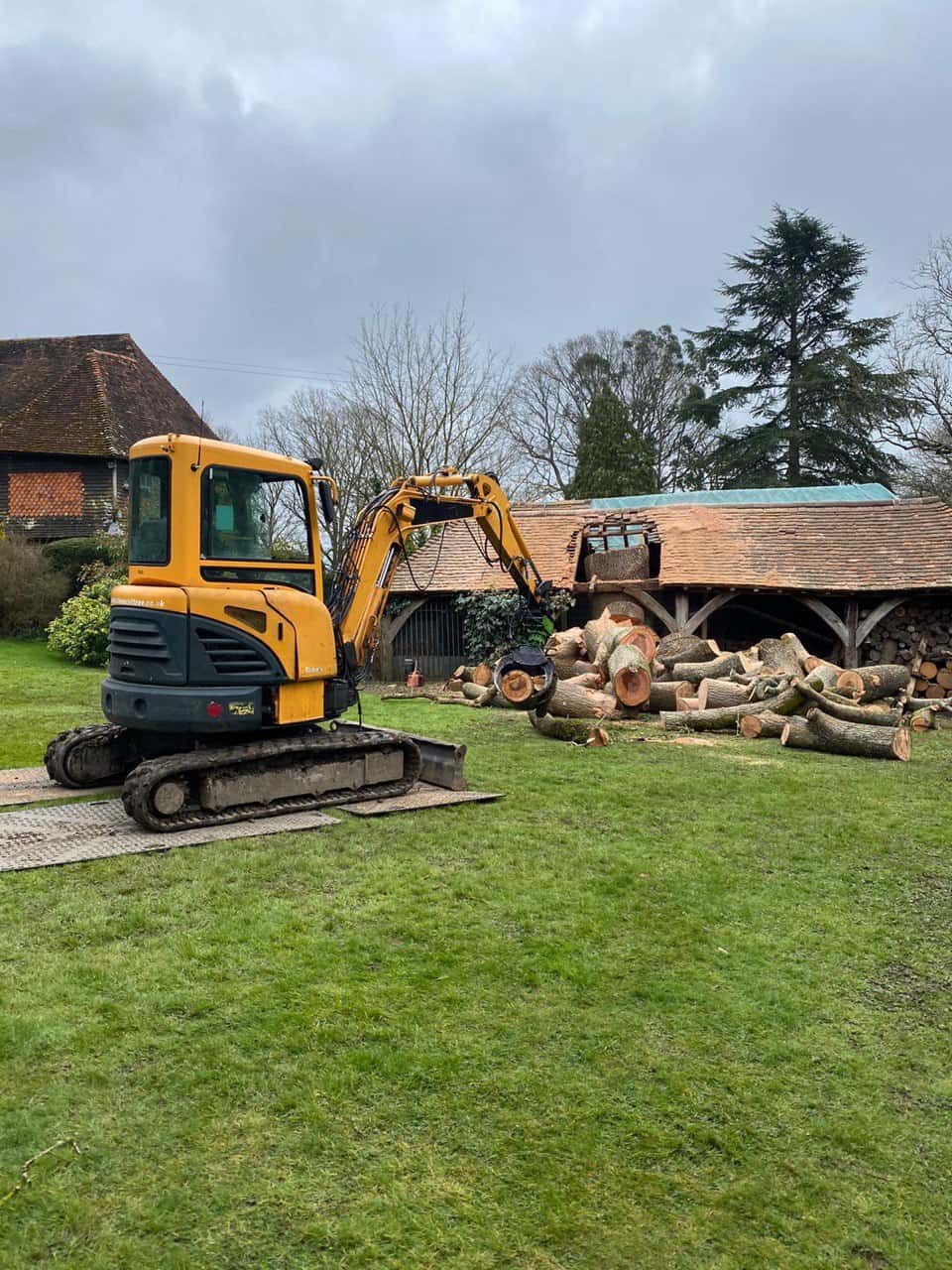
Old Tree Gone, New Garden Plans? Do Not Forget About the Stump
Removing an old tree can completely change the possibilities for a garden. An area that was previously dominated by a large trunk and canopy may suddenly offer more light, additional usable space and the opportunity to rethink the surrounding landscaping. However, there is one part of the tree that can easily be overlooked once the main trunk and branches have gone: the stump.
A remaining tree stump may initially seem like a minor inconvenience, particularly if it sits close to ground level. In reality, it can become a significant obstacle when you start planning a new lawn, planting area, path, patio or other garden improvement.
For homeowners in Castle Donnington, Leicestershire, professional stump grinding can provide the final stage of tree removal, leaving the area far more practical for whatever you have planned next.
Why Is the Stump Usually Left Behind After Tree Removal?
Tree felling and stump removal are separate processes.
When a tree is felled, the trunk can normally be cut close to ground level, but the base of the tree remains connected to an extensive root system beneath the soil. Removing this manually can require considerable excavation and may cause unnecessary disturbance to the surrounding garden.
Stump grinding offers a more targeted solution. Specialist machinery gradually reduces the remaining stump into small wood chippings, typically taking the main stump below the surrounding ground level. This approach is commonly used because it removes the obstruction without requiring the entire root network to be dug out.
A Stump Can Restrict Your New Garden Layout
Once a tree has gone, you may have a completely different vision for the area it occupied.
Perhaps you want to enlarge the lawn, change the planting arrangement or improve how people move around the garden. Whatever the plan, an old stump can dictate what you can and cannot do.
It may interfere with plans for:
- New lawn areas
- Garden paths
- Patios and seating spaces
- Flower beds and borders
- Replacement planting
- General landscaping
- More open and usable garden layouts
Removing the stump early in the planning process gives you considerably more freedom when deciding how the space should be used. Stump grinding is frequently carried out specifically to prepare areas for future landscaping.
Why Not Simply Landscape Around the Stump?
Designing around a stump can work in certain gardens, but it is worth considering whether you genuinely want it to become a permanent feature.
A stump that seems unobtrusive immediately after tree removal can become frustrating later. You may find yourself altering paths, lawn edges or planting simply to accommodate something that no longer serves a useful purpose.
There is also the stump’s gradual deterioration to consider. As the remaining wood naturally breaks down, its condition and appearance will continue changing.
If you already know that the space will eventually be redeveloped, dealing with the stump before beginning the landscaping often provides a much cleaner starting point.
Stump Grinding Can Make Lawn Improvements Easier
If the goal is to return the former tree position to lawn, leaving the stump in place creates an obvious obstacle.
Even when the stump has been cut very low, it can interfere with mowing and prevent the area from forming a continuous surface. Surface roots may also remain prominent around the former tree position.
Professional stump grinding removes the main woody obstruction below ground level. The area can then be prepared appropriately for its intended future use.
It is important to remember that stump grinding does not remove every root extending through the garden. Instead, it deals primarily with the stump and accessible root material around it, allowing the main obstruction to be cleared much more efficiently.
Think About the Stump Before Planning a New Patio or Path
Hard landscaping requires careful preparation, which makes an old stump particularly inconvenient.
If you are redesigning the garden after removing a mature tree, consider the stump before finalising where new paths, seating areas or other features will be positioned.
Building your garden layout around the stump simply because it remains there can compromise an otherwise practical design.
Having it professionally assessed and ground out first allows the landscaping to be planned around how you actually want to use the garden.
Old Stumps Can Become Trip Hazards
Not every reason for stump removal is related to appearance.
A low stump can be surprisingly easy to overlook, particularly once surrounding grass or vegetation begins growing around it. In frequently used sections of a garden, this can create an unnecessary obstruction.
The issue can be particularly noticeable where the stump is situated close to:
- Walking routes
- Lawn areas
- Garden entrances
- Paths
- Children’s play spaces
- Regularly used seating areas
Removing the main stump below ground level can help create a clearer and more practical surface.
What About New Shoots Appearing From the Stump?
Some tree species can produce new shoots from a remaining stump or root system following removal of the main tree.
These shoots are rarely helpful if the intention was to clear the tree and redevelop the area. Instead, they can create repeated maintenance as fresh growth continues appearing.
Stump grinding removes the main stump structure and can significantly reduce the problem of unwanted regrowth from the remaining base.
If shoots have already begun appearing around an old stump in your Castle Donnington garden, it is worth having the area assessed rather than continually cutting them back.
Decaying Stumps Change Over Time
A stump does not remain in the same condition indefinitely.
Once the tree has been removed, the remaining timber gradually begins decomposing. This process can continue for a considerable period depending on the tree species, stump size and surrounding conditions.
Decaying timber may also encourage fungi and insects associated with decomposing wood.
Although natural decomposition is part of what eventually happens to an untreated stump, it may not be desirable in a garden area that you intend to keep neat, accessible and ready for landscaping.
Why Stump Grinding Is Usually More Practical Than Digging
The base of a mature tree can be extremely substantial.
Trying to excavate it manually means dealing not only with the visible stump but also with thick structural roots extending into the surrounding ground. This can make removal highly disruptive.
A stump grinder tackles the woody material mechanically.
The machine uses a cutting wheel to progressively grind away the stump rather than attempting to pull the entire root system from the soil. Professional equipment also allows stump removal to be carried out more precisely and with less unnecessary ground disturbance than extensive manual excavation.
Can Large Stumps Be Ground Out?
Stump grinding is suitable for a wide variety of stump sizes, but each situation needs assessing individually.
A large mature tree can leave behind a substantial stump, while the surrounding environment may also affect how the machinery can be positioned and used.
Important considerations include:
Stump diameter
Larger stumps naturally require more extensive grinding.
Location
A stump positioned in an open lawn presents different working conditions from one situated close to a fence, path or garden feature.
Access
Suitable access is required to bring specialist equipment into the working area.
Surrounding roots
Prominent surface roots may also need consideration depending on what is planned for the area afterwards.
Professional assessment allows the work to be planned around the individual garden rather than treating every stump in exactly the same way.
Can Several Stumps Be Dealt With Together?
Yes. If previous tree or shrub removal has left several unwanted stumps around the garden, professional grinding equipment can often deal with multiple stumps as part of the same project.
This can be particularly useful when undertaking a wider garden redesign.
Rather than planning new landscaping around numerous old stumps, clearing them provides a much better foundation from which to reconsider the whole outdoor space.
Should You Grind the Stump Immediately After Tree Removal?
If you already know that the stump is unwanted, dealing with it as part of the wider tree removal project can make sense.
There is little benefit in allowing an unwanted stump to occupy the area for years if future plans require it to be removed anyway.
Completing stump grinding sooner means the space can begin transitioning towards its next use rather than remaining as an unfinished reminder of the old tree.
This is particularly useful when the tree was removed specifically to create additional usable garden space.
Plan Stump Removal Around What Comes Next
One of the most useful things you can tell your tree surgeon is what you intend to do with the area afterwards.
The requirements may differ depending on whether you want to create lawn, introduce new planting or completely redesign that part of the garden.
Understanding the intended outcome helps determine an appropriate approach to the stump.
The objective should not simply be to make the visible wood disappear. It should be to leave the area in a condition that supports your wider plans as effectively as possible.
Why Professional Stump Grinding Matters
Stumps are extremely dense, firmly rooted structures, and removing them effectively requires suitable machinery and experience.
Professional stump grinding allows the operator to work methodically around the stump while considering nearby garden features and the surrounding ground. Specialist equipment can grind the stump to an appropriate depth and minimise unnecessary disruption to the wider area.
For homeowners planning further landscaping, this controlled approach can make a considerable difference to what happens next.
Completing the Tree Removal Process in Castle Donnington
Tree removal can feel transformational, particularly when a large or unsuitable tree previously occupied a significant proportion of the garden.
However, leaving the stump behind can mean that the area is never completely reclaimed.
At Castle Donnington Tree Surgeons, we provide professional tree surgery and stump grinding services for properties throughout Castle Donnington, Leicestershire. Where an old tree has been removed, we can assess the remaining stump and determine an appropriate grinding approach based on its size, position and the surrounding garden.
The aim is straightforward: to help you finish the tree removal properly and leave yourself with a more useful space for whatever comes next.
Conclusion
Removing an old tree can open up exciting possibilities for your garden, but those plans can quickly become restricted if a large stump remains in the middle of the space.
Stump grinding can remove the main obstruction, improve the usability and appearance of the area, reduce unwanted regrowth and provide much greater flexibility for future landscaping. It can be particularly worthwhile when you are planning a new lawn, planting scheme, path, patio or wider garden redesign.
If you have removed a tree and are now considering what to do with the remaining space, Castle Donnington Tree Surgeons can provide professional stump grinding in Castle Donnington, Leicestershire. Contact our team to arrange an assessment and take the final step towards preparing your garden for its next chapter.
Call us on: 01332 215 696
Click here to find out more about Castle Donnington Tree Surgeons
Click here to complete our contact form and see how we can help with your tree needs.