Dangerous Trees: Warning Signs That May Require Professional Tree Felling
Trees provide shade, improve outdoor spaces and contribute to the natural character of a property. However, when a tree becomes structurally unstable, diseased or severely damaged, it can pose a risk to people, buildings and surrounding gardens. Recognising the warning signs early can help property owners make informed decisions about tree care and safety.
For homeowners and landowners in Castle Donnington, Leicestershire, regular tree inspections are particularly valuable when mature trees are close to buildings, driveways, footpaths or other frequently used areas. While some problems can be managed through pruning or other tree surgery work, more serious defects may mean that professional tree felling is the safest practical option.
What Makes a Tree Potentially Dangerous?
A tree does not necessarily need to be removed simply because it is old, large or showing signs of damage. Many trees can remain healthy with appropriate maintenance, and some visible defects may be manageable without felling.
The key consideration is whether the tree’s condition creates an unacceptable risk and whether suitable alternatives can address the problem. Professional tree surgeons assess the tree’s structure, health, location and surrounding environment before recommending the most appropriate course of action.
Major Cracks in the Trunk or Main Branches
Deep cracks and splits in a tree’s trunk or main branches can indicate structural weakness. These defects may develop following storms, prolonged stress, heavy branch growth or the gradual deterioration of internal wood.
Not every crack means a tree is about to fail, but large or widening splits deserve attention, particularly when they affect the main trunk or major supporting limbs. A weakened branch may break away unexpectedly, while a compromised trunk can affect the stability of the entire tree.
If you notice a significant crack, avoid standing beneath the affected area and arrange a professional assessment. A tree surgeon can determine whether selective pruning, further monitoring or tree felling is appropriate.
A Leaning Tree or Disturbed Ground Around the Roots
A tree that has developed a new lean may be showing signs of root failure or instability. This can sometimes happen after strong winds, when saturated ground reduces the support available to the root system.
Other warning signs include raised soil around the base, exposed or broken roots and cracks appearing in the ground near the trunk. These changes can suggest that the tree’s root plate has shifted.
Some trees naturally grow at an angle, so the direction of growth alone does not establish that a tree is dangerous. A sudden change in position, especially when accompanied by disturbed ground, should be assessed promptly by a qualified professional.
Dead or Hanging Branches
Dead branches can become brittle and break without much warning. Large dead limbs over a garden, entrance, parking area or walkway are particularly concerning because falling timber can cause injury or damage property.
Look for branches without foliage during the growing season, extensive deadwood in the crown, or limbs that are visibly split or hanging loosely. However, seasonal leaf loss and sparse growth do not always indicate that a tree is dying.
Professional tree surgery may resolve the issue through deadwood removal or crown maintenance. If extensive deadwood is linked to serious structural deterioration, the tree may require a more comprehensive assessment to determine whether felling is necessary.
Signs of Disease or Internal Decay
Fungal growth around the trunk or roots, cavities, areas of missing bark and soft or decaying wood can indicate that a tree’s health or structural strength is deteriorating.
Internal decay is not always visible from the outside, and the presence of a fungus does not automatically mean that a tree must be removed. Nevertheless, decay affecting important supporting parts of the tree can reduce its ability to withstand wind and the weight of its branches.
A professional inspection can help establish the extent of the problem and whether the tree can be retained safely. Where decay has substantially weakened the structure, tree felling may be recommended to manage the risk.
Storm Damage and Broken Limbs
Severe weather can leave trees with split trunks, broken branches, damaged crowns or partially uprooted root systems. Even when a tree remains standing after a storm, hidden structural damage may make it less stable than it appears.
Avoid approaching trees with suspended branches or visibly unstable trunks. Do not attempt to remove large broken limbs yourself, as tension within damaged timber can cause sudden and unpredictable movement.
Tree surgeons can assess storm-damaged trees, identify immediate hazards and determine whether targeted pruning or complete removal is needed. Acting promptly can help prevent an already damaged tree from becoming a greater safety concern.
When Is Professional Tree Felling Necessary?
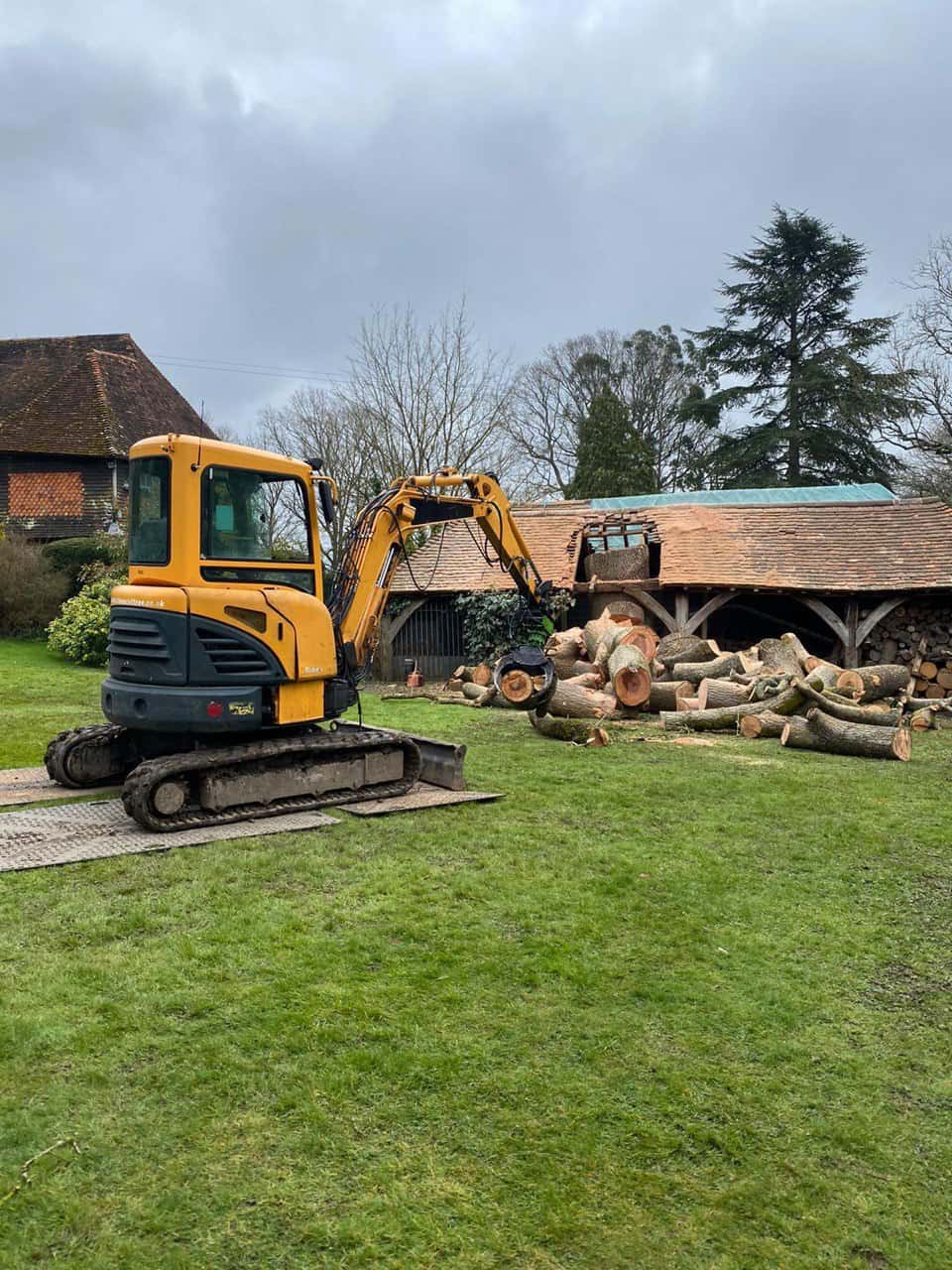
Tree felling may be appropriate when a tree has severe structural damage, extensive decay, significant root instability or other defects that cannot be managed adequately through maintenance. It may also be considered when a tree presents a substantial risk to nearby people or property and there is no suitable alternative.
The decision should follow a careful assessment rather than relying on one warning sign alone. Where possible, retaining a tree through pruning or other appropriate tree surgery may be a suitable option. However, when the risks cannot be reduced sufficiently, removal may be the most responsible solution.
The location of the tree also matters. Trees close to buildings, boundaries, access routes or other obstacles often require careful planning and controlled removal techniques to protect the surrounding area.
Why Choose Professional Tree Surgeons in Castle Donnington, Leicestershire?
Dangerous tree work requires an understanding of tree structure, cutting techniques and the risks associated with falling timber. Attempting to fell a large or unstable tree without suitable training and equipment can put people and nearby property at risk.
Castle Donnington Tree Surgeons can assess trees showing signs of damage, disease or instability and advise on suitable tree surgery solutions. Where professional tree felling is necessary, the work can be planned around the tree’s condition and the surrounding space, helping to manage the risks involved.
If you have noticed concerning changes in a tree on your property, contact Castle Donnington Tree Surgeons to arrange a professional assessment and discuss the most appropriate next steps.
Conclusion
Cracked trunks, unstable roots, dead branches, fungal growth and storm damage can all indicate that a tree needs professional attention. Although these warning signs do not always mean felling is required, they should not be ignored when the tree is close to people or property.
For property owners in Castle Donnington, Leicestershire, early assessment can help establish whether a tree can be managed through routine tree surgery or whether removal is necessary. Castle Donnington Tree Surgeons can help identify potential hazards and recommend an appropriate approach to keeping your outdoor space safe and well maintained.
Call us on: 01332 215 696
Click here to find out more about Castle Donnington Tree Surgeons
Click here to complete our contact form and see how we can help with your tree needs.